Your Teen Will Actually Want This Page on Their Wall
An invitation to try something new, and have a really good time doing it
Let me paint you a picture.
You finish a scrapbook page. It’s beautiful. It’s got the photos, the journaling, the little paper flowers. You are proud of it.
You show your teenager.
They smile. They say “that’s so cute, Mom.” And they go back to their phone.
We’ve all been there.
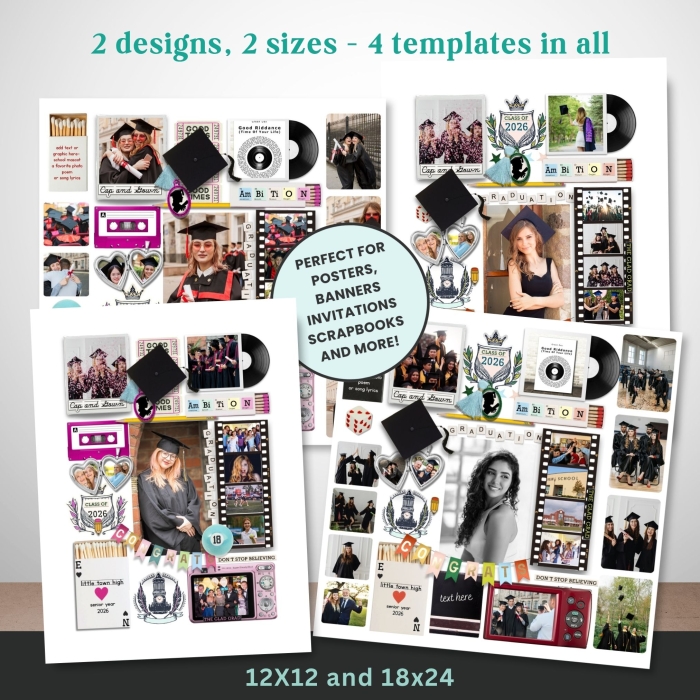
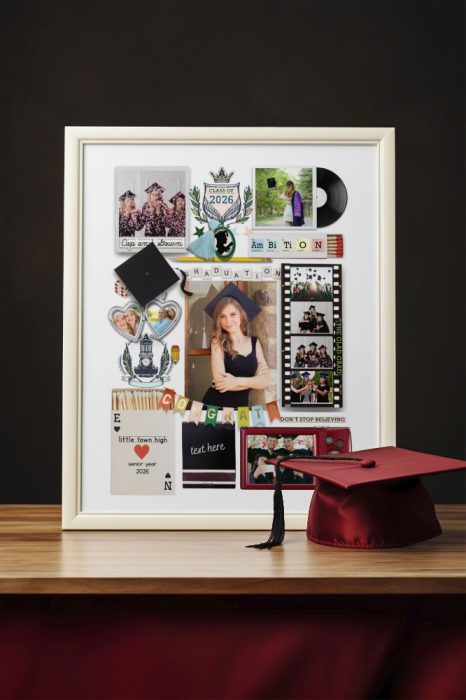
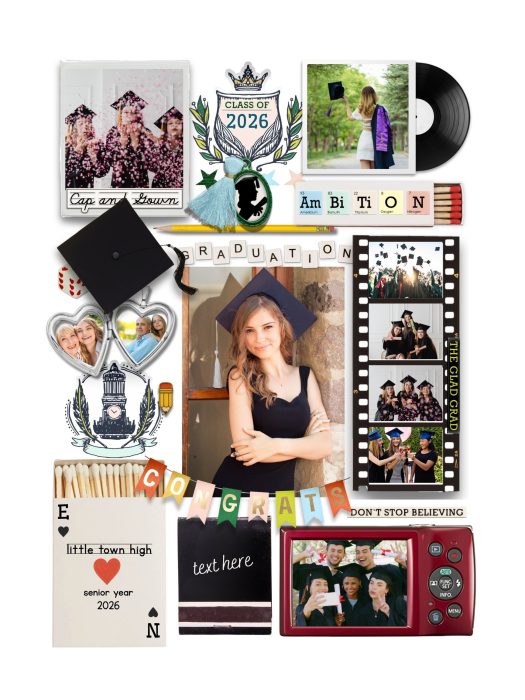
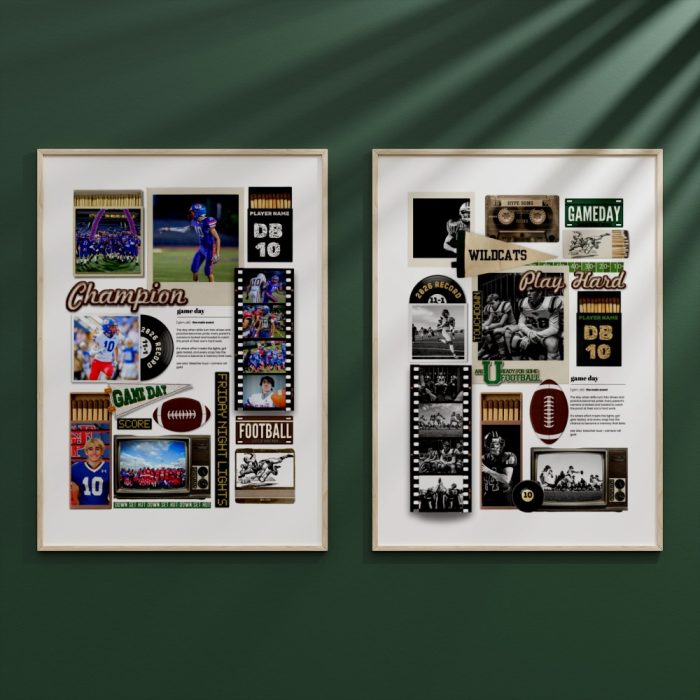
Now imagine showing them a page that looks like it came off a vintage concert poster. Or a 1950s hotel matchbook. Or the aesthetic their favorite band uses on their merch. Bold type. Retro colors. Film strips. A cassette tape labeled with their actual song. A pennant from their actual school.
That’s a different reaction entirely.
That’s Matchbook Style, and that’s what the new ForeverJoy Canva templates are built around. This post is your invitation to come play in this aesthetic. It doesn’t matter if you’re brand new to Canva or you’ve been building digital pages for years. This style is genuinely fun to work in. And the pages it produces? Your kid will want to frame one. That’s not an exaggeration.
Let’s get into it.
First: What Is the Vibe, Exactly?
Think about the visual language of mid-century America. The matchbooks that restaurants and hotels handed out. Bowling alleys. Supper clubs. Tiny folded paper covers with bold colors, heavy type, and illustrations that told you everything about the place in one glance.
Now mix that with the things teenagers currently think are cool: vintage, analog, retro, Y2K, “that old film look.” Cassette tapes. Vinyl. Film photography. The aesthetic that says this moment was real and it mattered.
Matchbook Style sits right where those two worlds meet. It’s nostalgic, but not in a grandma’s-sewing-room way. It’s nostalgic in the way that vintage band tees are nostalgic. In the way that disposable cameras came back. In the way that your teenager is absolutely more interested in a vinyl record than a Spotify playlist right now.
It’s warm. It’s bold. It’s a little bit rough around the edges. And it tells a story without you having to explain a single thing.
Why It Works So Well for Milestone Layouts
Here’s what I love about this style for the pages that matter most: graduation, prom, game day, senior year.
Every element earns its place. There’s no filler. When you put a matchbook cover on a page, it’s doing the same thing a matchbook always did: marking a moment, a place, a time. When you put a film strip on a page, you’re invoking the entire history of people pointing cameras at things they didn’t want to forget. When you put a cassette tape labeled “Our Song” on a prom page, you don’t have to write a single word about the music. The object says it.
That’s visual storytelling. And it’s built into the style itself.
Your photos carry the personal story. The aesthetic carries the era. Together, they make something that feels like a keepsake, not just a pretty page.
Here’s How to Jump In (at Any Level)
If you’re newer to Canva templates:
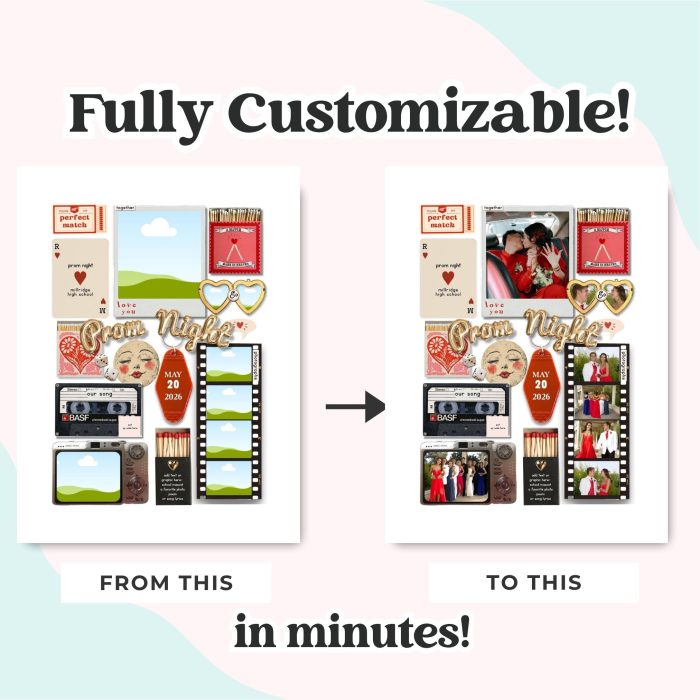
Start by just swapping the photos.
Open your template. Click on any photo placeholder: the film strips, the camera frame, the square photo areas. Drop in your photo. Canva crops it automatically. Do that for two or three photos on the page, and you’ll already have something that feels like yours.
Then look at the text elements. The ones that say things like “little town high” or “senior year 2026” or “game day.” Click them, type your own details. School name. Year. Your kid’s name. A score. A date.
That’s genuinely all you need to do for a complete, beautiful page.
The vintage elements do the heavy lifting for you. You don’t need to add anything. The matchbook covers, the pennants, the cassette tape, the retro camera are already there, already styled, already doing the storytelling work. Your job is to drop in your photos and your words. Done.
If you’re comfortable in Canva and ready to make it yours:
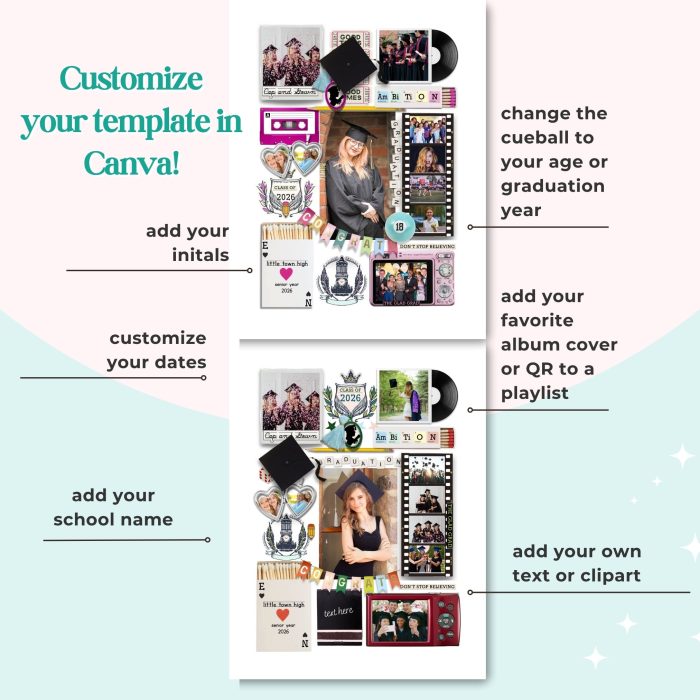
Start layering in your own elements.
The templates are built to be added to. Some ideas:
- Upload a photo of the actual program or ticket from the event and tuck it behind a matchbook element like it’s been slipped underneath
- Add a small handwritten-style text element with an inside joke, a quote, a lyric
- Pull in a sticker or element from Canva’s library that matches the theme (search “vintage,” “retro,” “film,” “pennant,” “varsity”)
- Change a color on one element to match your school colors or your photo palette
The key to staying in the Matchbook vibe: keep your additions in the same warm, slightly worn energy. Avoid anything too clean, too pastel, too modern. If an element looks like it could be on a phone screen from 2024, it’s probably going to fight the aesthetic. If it looks like it could be on a motel matchbook from 1962, add it.
If you’re an experienced scrapper ready to really play:
Use the template as your foundation and build a story system.
Think about what the page is actually trying to say. Not just what happened, but how it felt.
The prom page isn’t just about prom. It’s about the whole buildup. The dress. The nerves. The song that was playing when they walked in. The photo that didn’t turn out. The moment that did.
The matchbook elements give you entry points into all of those stories. The “Our Song” cassette? Write the actual song on it. The hotel key tag? Write the name of the venue. The “Perfect Match” matchbook cover? That’s a journaling prompt hiding in plain sight.
Here’s a way of thinking about it: every vintage object on the page represents a question you can answer in your journaling. What was the song? Who was the date? What’s the score you’ll never forget? What did the school actually look like on that Friday night with all the lights on?
Answer those questions, even in three words each, and your page becomes something people will read, not just look at.
The One Thing That Makes This Style Easy
With a lot of design trends, you have to fight to stay in the aesthetic. Things slip into “too modern” or “too busy” without you noticing.
Matchbook Style is forgiving in a really specific way: imperfection is the point.
The original matchbooks weren’t perfectly printed. The colors weren’t always exactly right. The type wasn’t always perfectly centered. That slight roughness, that “made by human hands” quality, is what makes the style feel warm instead of cold.
So if your photo is a little grainy? Great. If your journaling text is slightly tilted on a card element? Perfect. If you’ve got a mix of very different elements that don’t quite “match” in the traditional scrapbook sense? That’s the aesthetic working exactly as intended.
You cannot overdo the layering on these pages. Add the matchbook. Add the film strip. Add the pennant AND the cassette AND the retro camera. It’s supposed to feel like a drawer full of keepsakes, not a museum display case.
Let it be a little chaotic. That’s where the joy lives.
What’s Coming Next
These six Canva templates (graduation, prom, and game day in two colorways each) are just the beginning of this collection. More themes are coming. More colorways. More milestone moments.
If there’s a moment from your teenager’s life that deserves a Matchbook Style page and you don’t see it in the current collection, tell me. I want to know what you’re trying to document.
In the meantime: grab a template, drop in your photos, and show your kid the page when you’re done.
I genuinely want to hear their reaction.
Go Make Something
The Matchbook Style collection is live now here on my website and in my shop, The Hybrid Press on Etsy.
Show me what you build. Share it in the group, tag me, send me a message. These templates were made to hold your family’s stories and I want to see them doing exactly that.
ForeverJoy Designs | The Hybrid Press on Etsy | foreverjoydesigns.com