In Part One (here) we talked about how your summer story already exists-even if it felt invisible. But knowing that is only half the puzzle.
The real question is: how do you actually turn those everyday bits and pieces into a story you can keep?
Let’s break it down.
Q: What if I don’t have photos?
A: You’re not out of luck. You can tell a summer story without a single snapshot if you let words do the heavy lifting. Sometimes just one phrase captures a moment better than an photo could!
Try these photo free ideas:
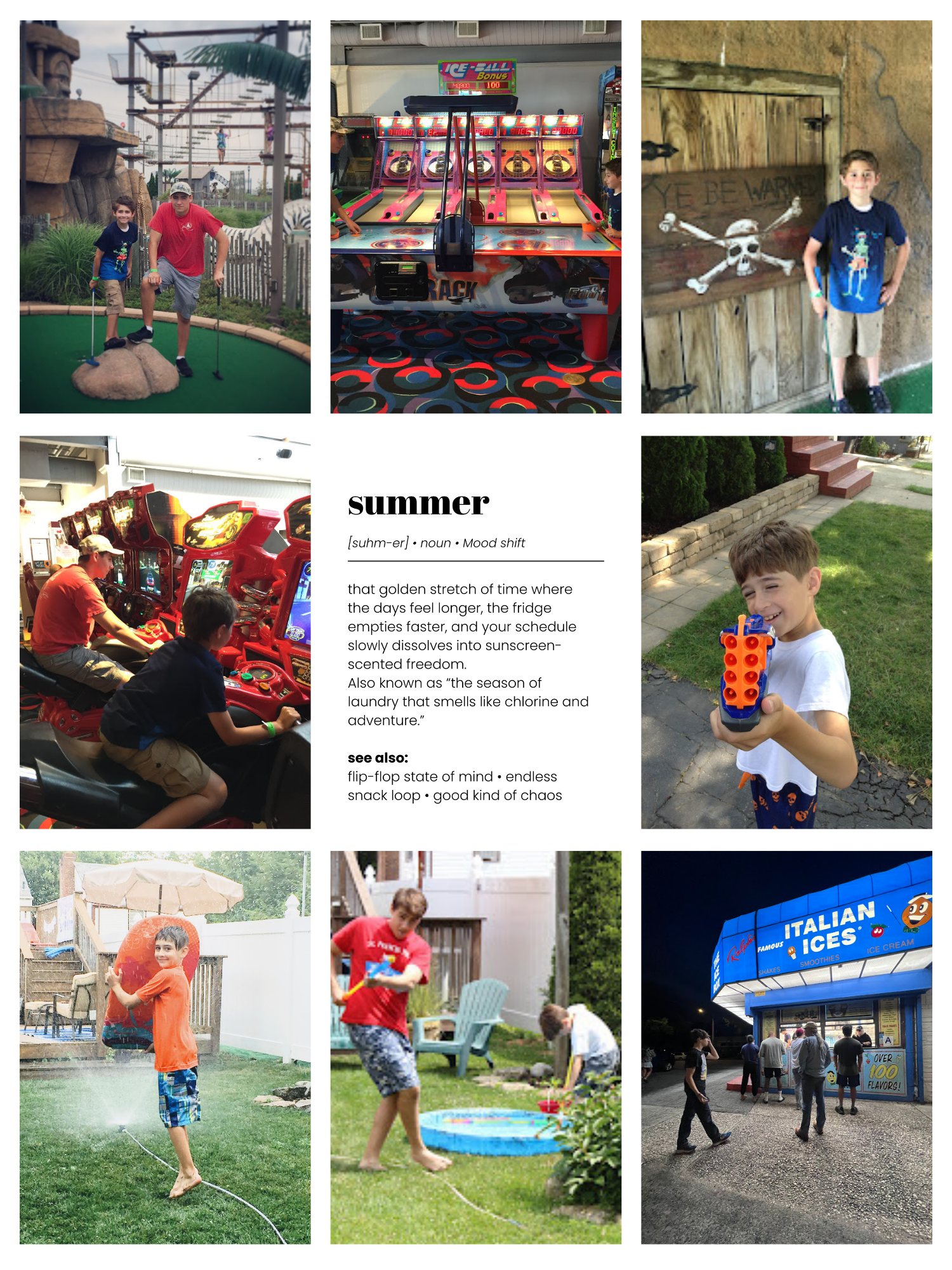
- Mini-definitions
Example: “Summer Reading (n.) the pile of books that never left the table but never quite got finished either.”
Why it works: A definition distills a whole vibe into a single line. It gives context and personality without requiring a photo. You can go literal or make it cheeky! And- bonus! each definition can stand alone as page titles or simple journaling, so you can build an entire spread around just one word.
Top 5 lists
Example: “5 Things We Ate Every Week,” “3 Places We Escaped the Heat.”
Why it works: Lists are natural memory sorters. Instead of trying to capture everything, you’re curating a handful of highlights. They’re quick to write, easy to read, and flexible! They can be a travel journal spread, a scrapbook page, or even a caption under a single photo. (hello easy journaling!) Lists also spark connections you wouldn’t otherwise think of: “Oh wow, we really did eat tacos every Tuesday.” That repetition is the story.
Before & After
Example: “June me vs. August me” — bedtime, mood, favorite snacks.
Why it works: Change tells a story. A simple “then and now” comparison brings out how the season shaped you – sometimes in silly ways (more freckles, a new favorite drink), sometimes in deeper ones (shifts in mood, routines, or energy). This format can be really powerful because it captures growth (or decline, or chaos!) without needing a big event. Your summer becomes visible through contrast.
Found words
Example: Copy a text, meme, or note-to-self and drop it right into a layout.
Why it works: We already write the story of our lives in bits and pieces without realizing it. That “LOL too hot to move” text, the meme you sent three different people, the half-finished grocery list -they’re all artifacts of your season. Using them in your scrapbook gives authenticity and humor, and it saves you from having to reinvent the wheel. These words carry the exact voice and mood of the moment! See how easy that was?
Each of these techniques works because they lower the barrier to entry. You don’t need dozens of photos or polished journaling. You just need a word, a list, a comparison, or a found scrap of text. That’s enough to spark memory and capture the heartbeat of a season.
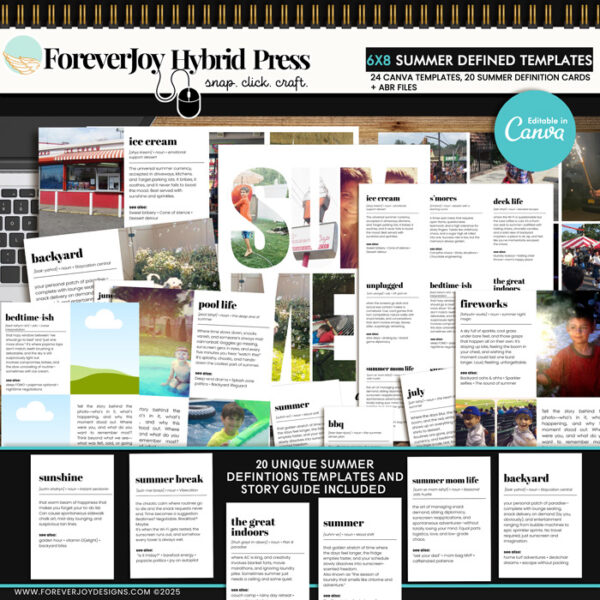
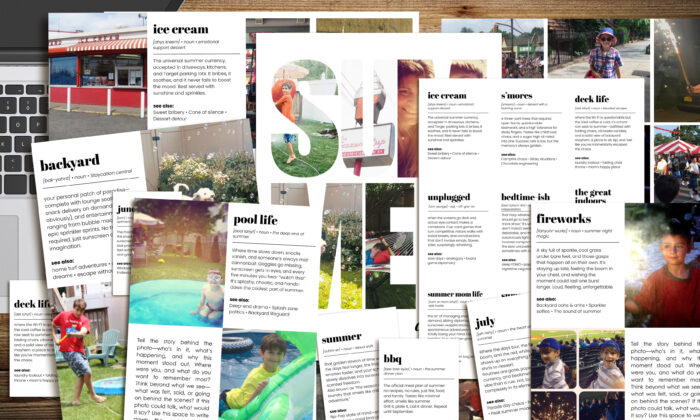
This “words-first” approach is exactly what inspired my Summer Defined kit found here– I love how a one word prompt is often enough to unlock a dozen small but powerful memories!
Q: Where do I even look for my story if I didn’t take many pictures?
A: Think like a detective. Your summer is hiding in more places than you realize:
- Amazon or Target orders: citronella candles, extra sunscreen, a cooler bag. What you bought tells what you lived.
- Google Maps timeline: a record of grocery runs, ice cream stops, or park walks you wouldn’t have thought to track.
- Text search: Type “lol” and rediscover what made you laugh. Search “ugh” and you’ll see the hot days or little frustrations that became part of the season.
- Playlists: Album covers, song titles, and even “top played” lists tell the soundtrack of your summer. Spotify to the rescue!
- Receipts & delivery history: DoorDash dinners, weekly coffee runs, farmers’ market Saturdays.
- Everyday objects: The worn sandals by the door, the half-empty sunscreen bottle, the dog leash you grabbed a hundred times.
Each of these scraps can become a page — imagine a spread called “The Summer of Dunkin Runs” or “Google Maps Says I Went to CVS 14 Times.” Ordinary? Yes. Scrapbook-worthy? Absolutely.
Q: How do I know what’s worth keeping?
A: If it repeated, it mattered. Repetition is your clue.
- The iced coffee cup that lived on your desk.
- The neighbor’s music you heard every Friday night.
- The show you binged until you knew the opening theme by heart.
- The single chair everyone raced to sit in first.
These aren’t background details, they’re the fingerprints of your season.
Q: How do I keep it simple so I don’t stall out?
A: Shrink the frame. Don’t try to capture an entire summer. Focus on a slice.
- A single page with “5 Things I Loved This Summer.”
- A journaling block called “What This Summer Sounded Like.”
- A timeline of one ordinary day that feels like every day you lived in July.
Think of it as a quick postcard to your future self, not a novel.
Q: How do I make it look good without overthinking?
A: Start with structure. Prompts or templates keep you moving instead of staring at a blank page. That’s why word-based prompts, like the definitions in the Summer Defined Templates, work so well! They give you a starting point and a container for your story.
Here’s the Bottom line:
Your summer’s story isn’t gone. It’s scattered – across receipts, playlists, screenshots., memes, texts, conversations, and the little objects you barely noticed while living with them every day. Define them, list them, frame them- and your story comes to life!
Start by naming one. Write it down. Pair it with a screenshot, a candid photo you take today, or a word prompt that pulls it into focus. That’s how an “invisible summer” becomes visible- one clue at a time.
Recommended products
-
SUMMER DEFINED | 6X8 Canva Template
Original price was: $7.00.$4.90Current price is: $4.90. -
FOLDABLE MINI BOOK | 8.5X11 Canva Template
Original price was: $2.95.$2.06Current price is: $2.06.